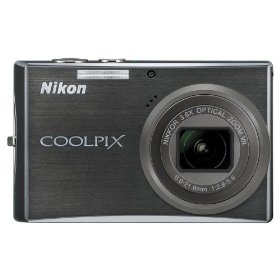
Cnet has published a review of the Nikon Coolpix S710.
If it wasn’t so slow, the Nikon Coolpix S710 would be a very good high-end, full-featured ultracompact.
Digital Camera News, Reviews and Tips
Cnet has published a review of the Nikon Coolpix S710.
If it wasn’t so slow, the Nikon Coolpix S710 would be a very good high-end, full-featured ultracompact.


PDN Gear Guide has posted a review of the Canon 5D Mark II.
While there are some definite stumbles-in particular, the focus system in low light was disappointing-other features live up to the hype. As a very solid low-end full-frame camera, the 5D II is definitely no flash in the pan.
For the latest news and reviews on the 5D Mark II, be sure to stay tuned to Photography Bay’s Canon 5D Mark II Reviews and Resources.
The following post is by Atlanta based photographer and writer Zach Matthews, who explains why it’s worthwhile to photographers to get the window seat when flying. Learn more about him at the end of this post.
Back in 2006, I went on my first assignment as a magazine writer. The Cloudveil company had just come into the fly fishing market (my area of specialty) and American Angler wanted me to cover the event. As the proud owner of a (then) new Nikon D70, I took every opportunity to take pictures, including candids of myself in my new role as a fancy journalist.

As we gained altitude on the Salt Lake City to Jackson, Wyoming leg of our flight, I snapped a shot or two out of the airliner’s window. Your modern airliner, say a Boeing 767, has double-paned window glass. The exterior skin has a thick glass plate, while the interior is a thin piece of Plexiglas, with an inch or two of space between. Generally, the interior pane will be very scratched, possibly distorted by oilslick defects, and in some cases flaking to pieces. That doesn’t mean you can’t take a picture through it, though—just as when shooting through chain link fencing, if your point of focus is far enough out, the glass will blur to a misty gray fog. [Read more…]

Canon has issued a service notice for the original Canon 5D. This is not for the Canon 5D Mark II.
From Canon:
We have discovered that, in rare instances, the main mirror of some EOS 5D Digital SLR cameras may detach due to deterioration in the strength of the adhesive. Accordingly, we would like to convey the details and our service policy concerning this phenomenon.
We offer our sincerest apologies to those customers who have been inconvenienced by this issue. Canon always strives to provide the highest quality products to our customers and we will spare no effort in our quality management to make sure our customers can use our products with confidence. We hope our efforts will earn your understanding.
Phenomenon
The main mirror of the camera detaches and images cannot be viewed through the viewfinder.
Affected products
EOS 5D Digital SLR cameras whose main mirror has detached.
User Support
We will repair and reinforce the mirror portion of the affected products free of charge. If you own one of the affected products, please contact our Customer Support Center.

Let’s Go Digital has posted a review of the Nikon D700.
Don’t be blinded by a few more pixels. The D700 performs better than its rivals in many areas.
Read Photography Bay’s Nikon D700 Review.
For the latest Nikon D700 news and reviews, be sure to visit Photography Bay’s Nikon D700 Reviews and Resources.

PDN Gear Guide has posted a review of the Sony A900.
No other camera aside, perhaps, from the 21.1 Canon EOS 1Ds Mark III has produced such rich, luscious, and true-to-life tones in good lighting as the A900.
For more news and reviews, check out Photography Bay’s Sony A900 Reviews and Resources.
Canon Professional Network has published a review of the Canon 5D Mark II, which was written by professional wedding photographer Jeff Ascough.
I can see some of the ‘weaknesses’ it has compared to the 1 series but, those aside, it is really good. For me, the image quality coupled with the size and weight of the camera are very, very appealing.
For the latest news and reviews on the 5D Mark II, be sure to stay tuned to Photography Bay’s Canon 5D Mark II Reviews and Resources.
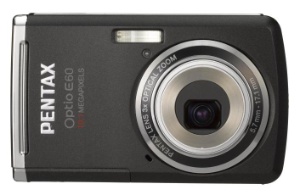
Cnet recently published a review of the Pentax Optio E60.
The Pentax Optio E60 is an inexpensive compact camera that produces good photos and doesn’t require much expertise to snap them.

Neocamera has posted a review of the Canon PowerShot E1.
Certain aspects of its image quality such as color and white-balance accuracy are rather good, while others such as vignetting are not.
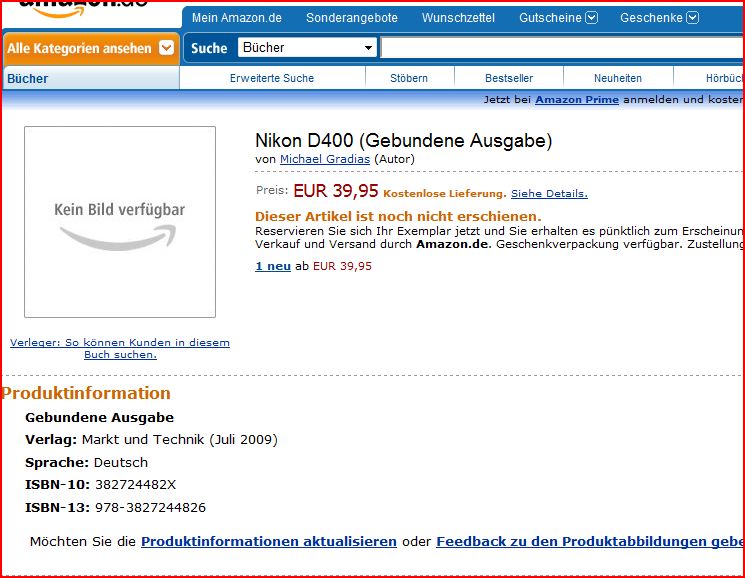
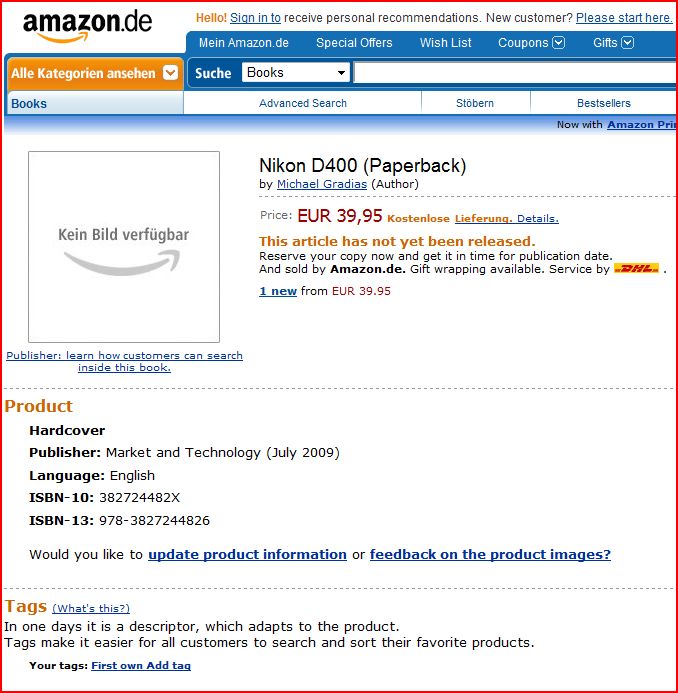
Amazon Germany has a listing for a Nikon D400 book that is a hardcover book and appears to be set for release in July 2009. A search for the ISBN numbers noted on the product page reveals nothing more than forum posts and blog chatter about this particular listing on Amazon.de.
Here is the link to the product page while it’s still up (copy and paste into your browser):
The screen capture above is the actual page on Amazon.de. The below screen capture is just and automated translation of the same.
While the Nikon D400 clearly remains a rumor for now, this adds a little fuel to the fire that’s been building for a few months. If you recall, there was a similar “leak” of a book on Amazon.com for the Canon 5D Mark II prior to its release way back in May 2008. Remember this. After the leak, the author issued a statement vehemently denying any legitimacy to the rumor. We all know how that one turned out.
For the latest news and rumors on the D400, stay tuned to Photography Bay’s Nikon D400 page.