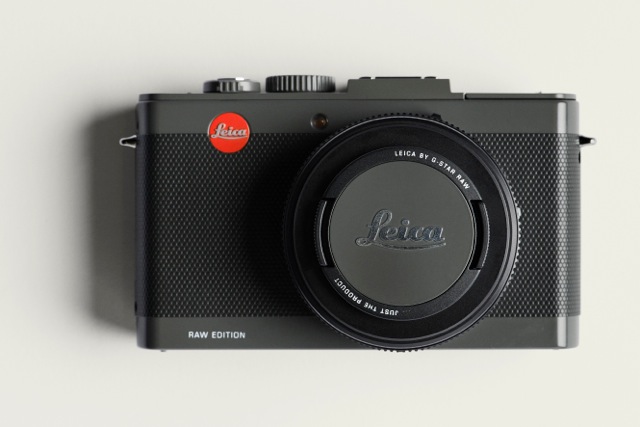
Leica has unveiled a new version of its D-Lux 6 point and shoot camera. The G-Star RAW Edition is a collectible version of the D-Lux 6 and will be available only through Leica stores and boutiques. [Read more…]
Digital Camera News, Reviews and Tips
Leica has unveiled a new version of its D-Lux 6 point and shoot camera. The G-Star RAW Edition is a collectible version of the D-Lux 6 and will be available only through Leica stores and boutiques. [Read more…]


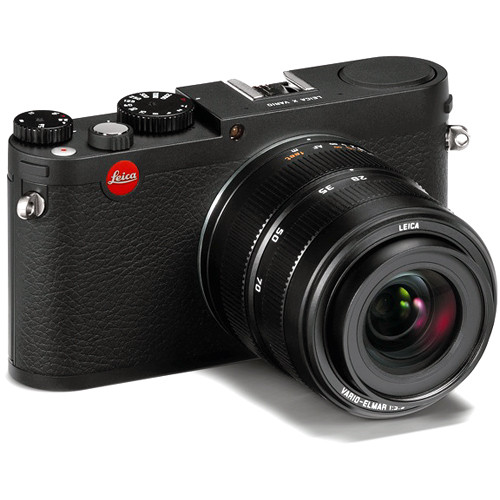
Leica has taken the official wraps off of its ‘Mini M’ teaser campaign and introduced to the world the Leica X Vario. [Read more…]
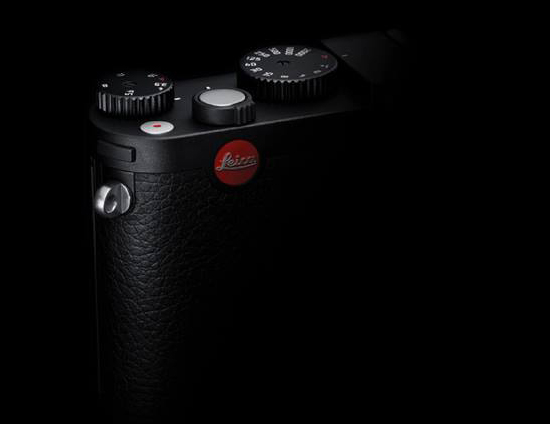
It appears that the cat is fully out of the bag with the upcoming Leica Mini M, the proper model name of which will be the Leica X Vario Type 107.
Additionally, the initial specs that we hoped were wrong have been all-but-confirmed, which means the new camera will sport an APS-C sensor and a fixed 18-46mm f/3.5-6.4 zoom lens. As such, it seems that the X Vario Type 107 will be paired as a sibling to the 24mm f/2.8 fixed lens Leica X2. However, if the price turns out to be what’s rumored below, then it may cost substantially more in the US than the $2000 X2.
Additional leaked specs for the X Vario Type 107 are below. [Read more…]
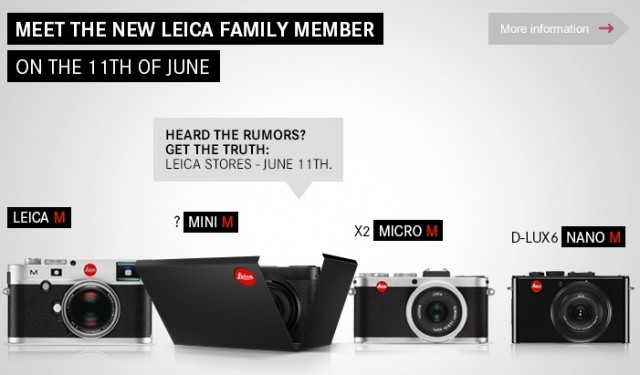
When Leica first teased the Mini M, I was ready to bet big on an APS-C mirrorless camera that accepts M-mount lenses. Then came the supposed leak that everyone pretty much took as gospel. It sure looked legit anyway.
The latest tease on the Leica website, however, casts doubt on the previous “leak” of the Mini M, which purportedly revealed its specs with a fixed lens in the 18-46mm range and a rather slow variable aperture of f/3.5-6.4. All in all, it was underwhelming and left many of us scratching our heads. [Read more…]
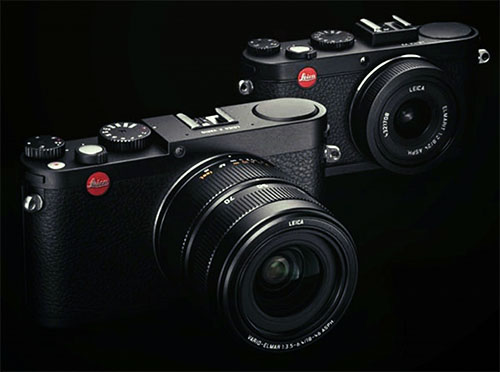
Leica Mini M (front) and Leica X2 (back)
My previous expectations that the Leica Mini M teaser would ultimate be a true “mini” Lecia M with a interchangeable lens mount and an APS-C sensor appear to have been a bit too lofty. [Read more…]

Leica’s tease of the upcoming Mini M continues as Leica has started to open up the box on its website, revealing just a sliver of the new camera. [Read more…]

Leica has its upcoming ‘Mini M’ camera listed on its website now. The ‘Mini M’ name appears to be where it fits in the lineup among Leica cameras, rather than the official model name.
No other information is known about the Mini M at this point; however, the logical conclusion would be that the Leica Mini M would be a rangerfinder-style, interchangeable lens, APS-C camera as a nice fit between the full frame Leica M and the fixed lens, APS-C Leica X2. Leica offers a newsletter signup on its website for future Mini M news.
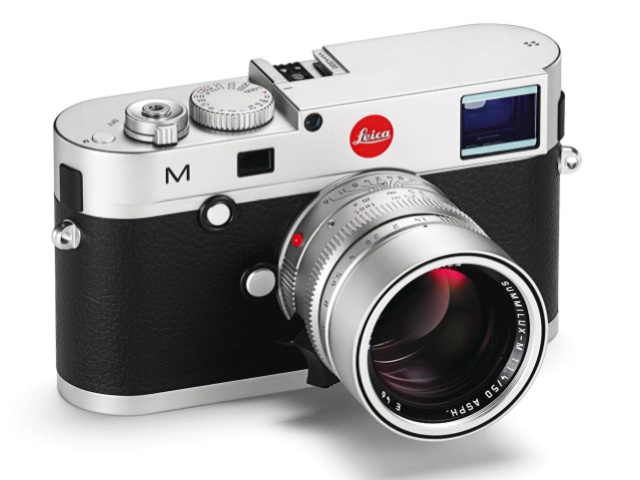
Leica has made several sample images from the new $7000 Leica M available for download, including both JPG and DNG files. Check them out here on Leica’s website.
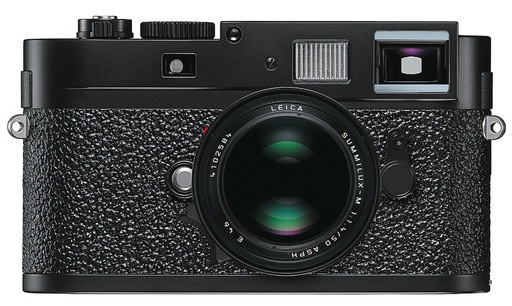
B&H has the Leica M9-P with a $1000 price drop, which brings the price down to $6995. Still, it’s a pricey camera but, hey, it’s a Leica. If the price still shows $7995, add it to your cart and you should see the price drop. Check it out here at B&H Photo.
Of course, the new Leica M can be pre-ordered for $6950 and the Leica M-E can be had for only $5450.

The Leica M, M-E and several other new Leica cameras are now available for pre-order at B&H. Check them out at the links below.