rights

Not only does this video win the cheesy award, but the advice it gives to the target audience (apparently those with drastically reduced IQs) flags warning signs for things both pro and amateur photographers do on a daily basis.

Not really what we need the government telling us right now given the current attitude of law enforcement to photographers in public spaces.

[via Chase Jarvis]

{ Comments on this entry are closed }

Alaska Photography Laws

by on August 1, 2011

in Legal

This post attempts to highlight Alaska laws that may be relevant to photographers (please read disclaimer below).  It is part of my ongoing effort to catalog the various state laws relating to photography.  You can see more on the main photography laws page.  If you are aware of other significant Alaska statutes or cases that relate to photographers’ rights or duties, please use the contact form to pass them along. [click to continue…]

{ Comments on this entry are closed }

This video is an interesting look into how modern technology, specifically cell phones, has given average citizens a powerful tool to combat police misconduct.  The examples shown in this video demonstrate why the right to photograph or record video in public is so important.

[via PetaPixel]

{ Comments on this entry are closed }

As seen in the above video, Marlon Kautz, an Atlanta man attempting to document police activity, had his cameraphone seized after he refused to stop filming them in a public place. Those police officers then deleted the photos/video of the police activity.

In addition to the $40,000 in damages the City is paying to Kautz to avoid a civil rights lawsuit, the Atlanta Police Department is adopting new operating procedures that prohibit police from interfering with citizens who are recording police activity.

It’s nice to see official police procedures catching up with the First Amendment, eh?

[via PetaPixel and AJC]

{ Comments on this entry are closed }

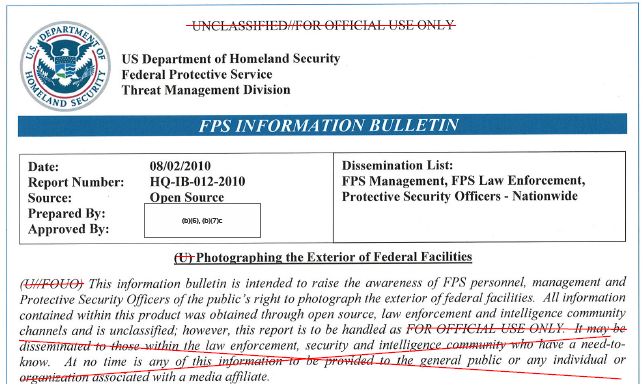
The US Department of Homeland Security issued an “Information Bulletin” concerning “Photographing the Exterior of Federal Facilities” last year.  The New York Times passed along the bulletin last week when it obtained a redacted version. [click to continue…]

{ Comments on this entry are closed }

Jacqui Smith, the British Home Secretary, has sent a letter to the British Journal of Photography. It’s a very worrying letter, affirming that while there are no legal restrictions on photography in public places, local chief constables are allowed to restrict photography in their jurisdictions.

The letter is a response to earlier correspondence from the BJP expressing concern about ongoing police surveillance of journalists, specifically photographers.

If the British government cares so little for the rights of photojournalists, it’s scary to even think about their views of photographers with less clear credentials. What are artists, hobbyists and grandparents wanting to record memories supposed to do in such situations?

{ Comments on this entry are closed }