
Originally uploaded by hawridger.
Shot with Rebel XT; EF 50mm f/1.8 II; Kenko Extension Tubes (total of 68mm stacked) @ f/22; 1/13s; ISO 100; +1 EV.
Digital Camera News, Reviews and Tips
Originally uploaded by hawridger.
Shot with Rebel XT; EF 50mm f/1.8 II; Kenko Extension Tubes (total of 68mm stacked) @ f/22; 1/13s; ISO 100; +1 EV.



Originally uploaded by Stuck in Customs.
With the 4th fast approaching (that’s Wednesday folks), everybody wants to get that great shot of the fireworks that has always turned out lame in years past. To get the most out of your 4th of July fireworks photographic experience, check out this post and send your fireworks shots in to be posted here.
[tags]photos, fireworks, howto, learn, diy[/tags]
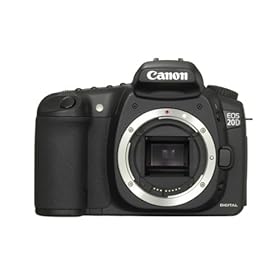 The Canon EOS 20D is an 8.2-megapixel semi-professional digital single-lens reflex camera, initially announced on August 19, 2004 at a recommended retail price of US$1,499. It is the successor of the EOS 10D, and is succeeded by the EOS 30D. Major changes over the 10D, aside from the new sensor and increased resolution, include almost instant power-on (0.2 seconds instead of the 10D’s 2.5 seconds), support for Hi-Speed USB 2.0 and support for the EF-S lens mount. Despite the resolution change, the sensor remains the same physical size as per its predecessor; all lenses still have an angle of view crop of 1.6 compared to the same focal length lens on 135 film. At the cost of a much noisier shutter than its predecessor shutter frame rate was improved, (5 frames per second), a larger 23 frame JPEG buffer but a smaller 6 frame RAW buffer, a new E-TTL II flash metering system, new DIGIC II image processor, a black and white mode as well as a brand-new nine-point autofocus system which is more responsive. The central cross-sensor has a high-precision mode which is activated by use of a lens of f/2.8 or faster.
Reviews
With 8-megapixel resolution, excellent image quality, reduced noise at high ISO settings, robust shooting performance, accurate AF, responsive Continuous AF, and improved ergonomics, there’s a lot to like about the 20D. Canon has certainly set a new benchmark for what an enthusiast dSLR should be, and the under-$1500 20D even encroaches on the performance envelope of the professional camera’s produced by some of Canon’s competitors!
Despite a two megapixel increase in pixel count (and hence a reduction in photosite size) the EOS 20D manages to deliver lower noise with better sharpness at higher sensitivities than the EOS 10D.
The Canon 20D is an excellent picture taking machine. Given its 8 Megapixel sensor, 5 frames / second shooting capability, instant turn-on, large buffer, extremely low noise, and excellent battery life, it’s hard not to give this camera an A. I might have even been tempted to give it an A+ if it weren’t for the missing ISO setting in the viewfinder and stupid mirror lock up sequence. The smaller dimmer viewfinder also knocks it down a peg.
The noise behavior of the 20D is just amazing and matches that of the excellent Canon 1D Mark II.
Despite the smaller pixels of the 20D, the noise levels have not increased over those of the 10D. In fact at high ISO settings, the 20D displays less noise than the 10D.
I’ll be blunt: the Canon EOS-20D is the best reasonably priced digital SLR that I’ve tested. And by reasonably priced I meant under $2000. There’s so much to like about the 20D, I don’t know where to start. Photo quality is excellent, with photos having an ultra smooth look to them. Color and exposure were both accurate. Personally I’d crank the sharpness up another notch, but that’s just me. Noise levels are very low, even at ISO 1600 — try that with your fixed-lens camera!
The camera performs superbly in every respect. Color is accurate, image noise very low, resolution excellent, and the camera is very responsive, both to the shutter button, and from shot to shot. Particularly impressive is the extent to which Canon managed to decrease high-ISO image noise, while at the same time going to a sensor layout with physically smaller pixels.
The Canon 20D digital SLR camera is a fantastic tool for sports and action photographers who like to make large prints. The camera is geared toward professional photographers, but priced with consumers in mind.
Not lost in the Canon EOS 20D upgrade is excellent image quality. Results from the 20D are impressive. All of the “Auto”s are excellent including Auto White Balance, Auto Exposure and as I mentioned already, Auto Focus.
Where to Buy
First off, consider going to your local camera store (and I don’t necessarily mean Wolf Camera at the mall). By going to your local camera store, you’re supporting your community and you just might build a lasting relationship with people you can rely on when you need some help or answers. If you’re buying online, I recommend sticking with Amazon, B&H Photo or Adorama. These three vendors are reliable, trustworthy and generally have the best (legitimate) prices. Additionally, purchasing your camera through these links helps support this site.
[tags]canon, 20d, eos, review, specs, info[/tags]

The Olympus E-3, which is Olympus’ flagship DSLR, was announced October 16, 2007 in the US. The E-3 has a 10.1 megapixel Live MOS sensor along with Olympus’ TruePic III™ digital processing engine. Additionally, Olympus touts the new autofocus system as the fastest AF speed in the world with the new ZUIKO SWD lenses.
As noted, Olympus has 3 new ZUIKO lenses:
If you don’t mind the smaller Four Thirds sensor or being limited by 10.1 MP resolution (little room to crop), this is definitely a camera to own and use.
The system works perfectly okay for static subjects, and for some things—notably macro photography of non-moving subjects, especially close to the ground—it can work a lot better than the regular optical viewfinder.
The viewfinder and AF are two usual scapegoats, but with the E-3, Olympus has significantly improved both. The tunnel-vision of earlier Four Thirds viewfinders has been upgraded to a large and bright experience that inspires you to use the 4:3 aspect ratio. The older basic 3-point AF system has been replaced by a new 11-point system which with the right lens and conditions can perform extremely quickly.
What the Olympus E3 brings to the table is excellent images, a great build quality, and a lovely user experience, but fails to match the innovation of the E-1, or even other models from the Olympus range. Instead it’s taken the best bits, refined them and put them all into a very usable camera.
All in all the Olympus E-3 impressed greatly. It is a very well thought-out camera with emphasis on the user. That doesn’t go for many other camera brands.
Because of its great reliability, comprehensive feature set, and great image quality, the Olympus model should certainly appeal to the most advanced photo enthusiast. More importantly perhaps, the price is right! In fact, in the professional category, this one deserves my “Best Value” award. It’s not only the most affordable but offers excellent return on the investment, making Olympus competitive in the high-end category.
If you need a tough, durable and very capable camera to endure harsh conditions the E3 would be near the top of my list for any camera category. I shoot in many of these situations, can see the utility of the E3 in these circumstances, and would welcome being able to use it. The camera is just not very quick on its feet for general purpose photos or when a quick capture of an elusive moment is called for. And this so perfectly mirrors the DSLR scene in general.
It makes sense given that Olympus has pinned its hopes on the E-3 as its most serious digital contender to date. Still, the amount of time you’ll spend penitently wading through the manual will reward you with some seriously good images. Colours are lovely and true-to-nature, and although Olympus may not have quite cracked the old white balance conundrum when faced with tricky conditions, at least you can work around it.
Photographing with the Olympus E-3 is a bit like driving a sports sedan. You may not need the speed and power most of the time, but you’re sure glad it’s there when you do. Plus, you get comfort and style with your scoot. The E-3 is more than competent for everyday shooting, and its speed and burst depth handle demanding moments with ease. Then, when you’re pushing pixels, the E-3’s files help you get back to pushing shutters sooner.
Robert Watcher posted some thoughts and sample images from his in-store shooting spree with the E-3. Check his site out for more:
It’s pretty cool when you can see the white balance change on the screen before you take the shot. Made it very easy to select the right setting for the light, just by scrolling through the presets and stopping at the one that looked best.
Biofos.com: The excerpt below does not do this series of several hands-on reviews justice. Click through for a ton of information on the new E-3. (Thanks to John Begin for pointing this resource out.)
I’m glad Olympus set about improving the various processing algorithms with their conservative hat on. From colour to noise reduction it seems just about a perfect balance. I’m relieved as I was expecting some pretty aggressive non-selectable Noise Reduction.
Photogaphy Review (Hands-On Preview)
The first thing I noticed was how fast the new auto focus is. Olympus is claiming that the E-3 combined with their new Zuiko Digital ED 12-60mm f/2.8-4.0 SWD lens has the fastest auto focus currently available. It certainly feels like it could be the fastest, although controlled testing needs to be done. The camera is noticeably larger than the E-510 and has the sturdy solid build and professional feel that the E-1 had. It really feels and behaves like a professional digital SLR body.
Popular Photography (Hands-On Preview)
The autofocus system is highly sensitive and significantly faster, with selectable 11 AF zones. Olympus says that the AF’s unique design uses a layered, slightly offset, CMOS sensor array to improve accuracy and low-light sensitivity. As a result, all 11 AF zones should be active cross-sensor types with any aperture lens. This may be the best AF system we’ve ever seen on an Olympus DSLR.
Imaging Resource (Hands-On Preview)
The Olympus E-3 is by far the most advanced Olympus digital camera I’ve used, very satisfying to shoot with, and one of the more compelling SLRs launched this season. Its design, though big, is ergonomically pleasing and handsome, and it gives you a feel of confidence and control. The E-3’s build matches the sturdy feel of Olympus’s high-end lenses, which are some of the tightest we’ve seen.
Olympus RAW codec for Vista
Free HLD-4 grip and backpack for Olympus UK customers.
The Official Olympus America E-3 Page
First off, consider going to your local camera store (and I don’t necessarily mean Wolf Camera at the mall). By going to your local camera store, you’re supporting your community and you just might build a lasting relationship with people you can rely on when you need some help or answers. If you’re buying online, I recommend sticking with Amazon, B&H Photo or Adorama. These three vendors are reliable, trustworthy and generally have the best (legitimate) prices. Additionally, purchasing your camera through these links helps support this site.